Coral Matters with The Cox Science Center
June 26th, 2025

June 26th, 2025
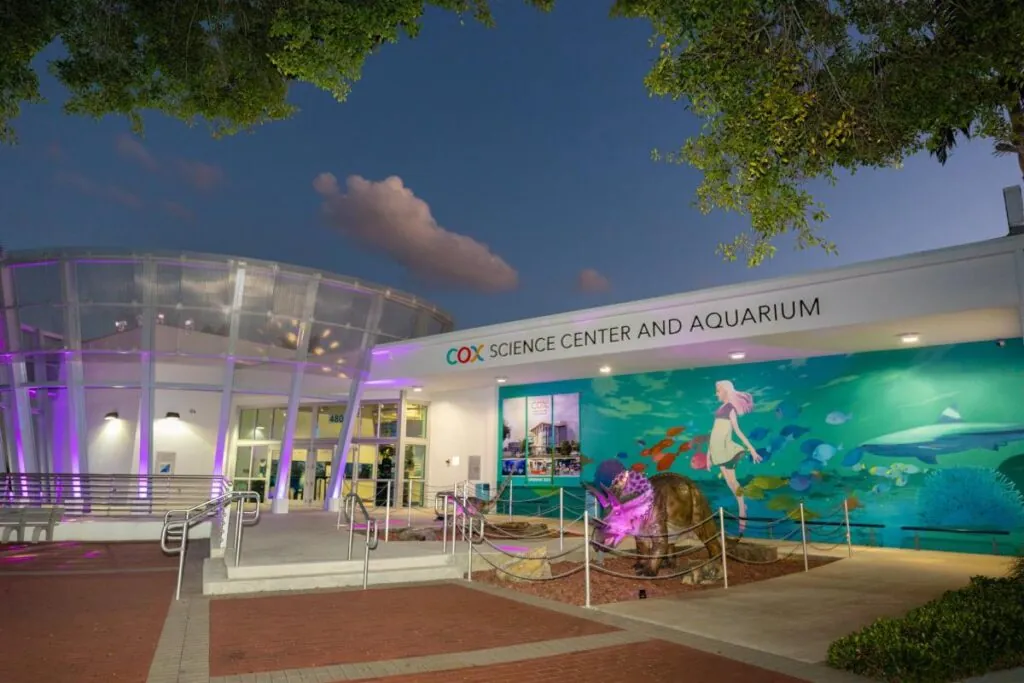
Entrance to The Cox Science Center. Image courtesy of The Cox Science Center
The Cox Science Center is beginning the process of starting its expansion with a focus on coral reef restoration and education. We asked the Vice President of Aquarium Operations, Jake Rosner, what The Cox Science Center is doing to help restore Florida’s coral reefs and educate the public on these critical ecosystems. And here’s what he had to say about the center’s mission and impact:

Rendering of the new entrance to The Cox Science Center. Image courtesy of The Cox Science Center
I would like to preface my answers below by first mentioning that the Cox Science Center and Aquarium is about to break ground on an expansion project that will reinvent the current Science Center. The aquarium will expand to ten times its current size and new classrooms, exhibits, and technology-enhanced classrooms will dramatically expand our capacity to reach students, families, and guests. Our mission is “To Open Every Mind to Science” and this burgeoning expansion project will take our mission and guest experience to the next level.

Rendering of new aquarium exhibits. Image courtesy of The Cox Science Center
Coral reef restoration and coral conservation are topics at the forefront of the conservation and oceanography communities. In South Florida, we see the impacts of reef degradation first-hand as coastlines are less insulated from erosion and wave impacts. Snorkelers, divers, and fishermen notice the decline in fish diversity as once healthy coral reefs lose their ability to sustain a diverse marine community. At Cox Science, we educate students through programs such as the Ocean Passport, part of the STEM Passport Initiative.
The Ocean Passport program sends educators to classrooms and immerses students in STEM-oriented problem-solving using real-world dilemmas facing our environment. Students then visit the Science Center, where they are introduced to our coral exhibits and learn the importance of reef conservation and the efforts being made by scientists around the world to protect our reefs.
The Science Center’s upcoming expansion will increase our capacity for in-house conservation efforts and allow Cox Science to contribute directly to the survival of some of Florida’s most at-risk coral species. Guests will be able to see coral conservation in action and have the opportunity to learn more about this process.
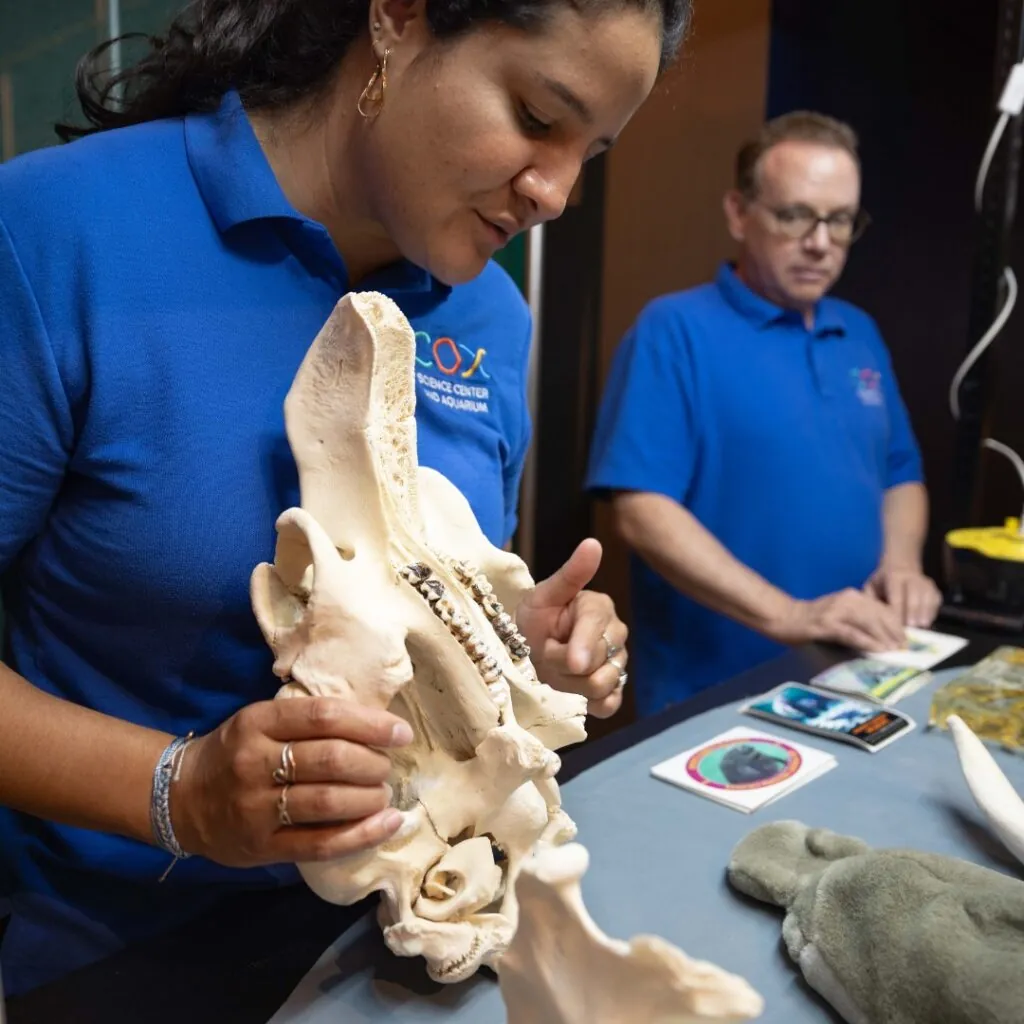
Educators are showcasing a mammal skull. Image courtesy of The Cox Science Center
The Science Center approaches coral reef education with a hands-on, interactive approach. The coral exhibits draw guest’s attention and introduce them to the beauty of healthy corals. Near our Coral Matters exhibit, there is an interactive touch screen game that provides guests an opportunity to explore a digitally rendered coral reef. The aquarium staff also conducts a series of interactive programs daily for all guests. The aquarium’s interactive programs vary in topic and include coral health discussions where guests can interact with various coral skeletons and practice their own coral identification. Other program topics include shark jaw identification and the importance of shark conservation and an alligator educational touch interaction.

Aquariums of the Atlantic. Image courtesy of The Cox Science Center
The Science Center currently has two live coral exhibits for our guests to enjoy. The first exhibit is called Coral Matters and represents a healthy coral reef you might find close to shore here in Florida. This exhibit consists of large coral colonies as well as gorgonians, anemones, and snails, which all contribute to reef health.
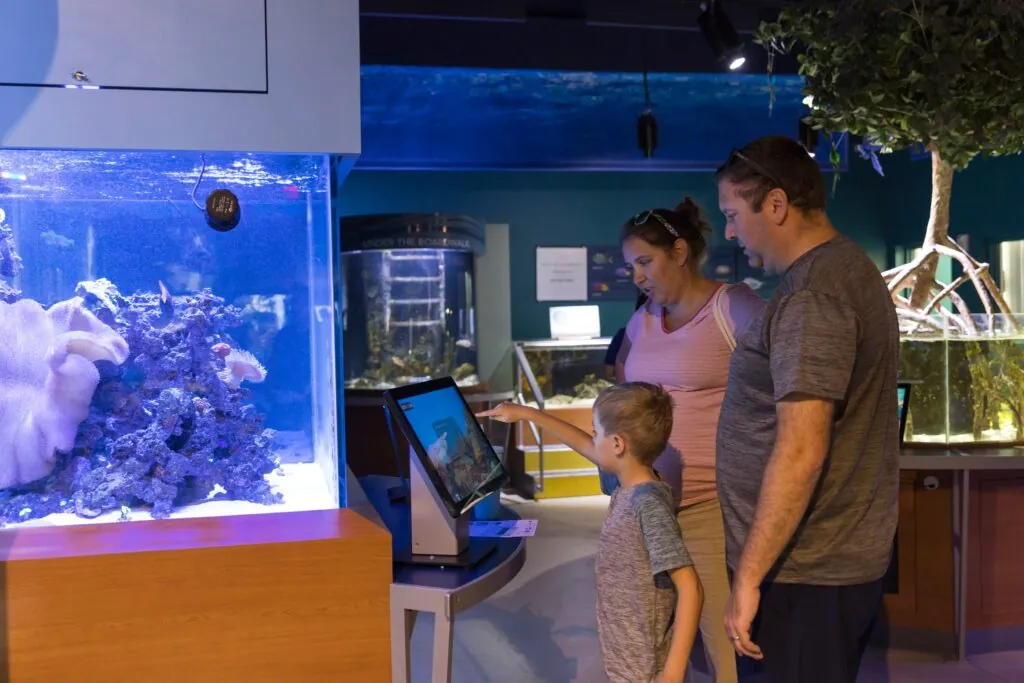
Guests interacting with the Coral Matters exhibit. Image courtesy of The Cox Science Center
The second exhibit is known as the Coral Frag Exhibit and represents a lab setting where scientists fragment larger coral colonies into smaller pieces. The fragmentation process produces a large number of small, genetically identical colonies from the parent colony. These small fragments grow much faster than their larger counterparts, which speeds up reef restoration efforts. Both exhibits are surrounded with educational messaging highlighting the plight of coral health and the methods scientists use to save the reefs.

Coral Frag Exhibit at The Cox Science Center
Local school districts are critical partners in our educational efforts as we host thousands of young students every year. The Science Center’s education department works closely with the school districts to ensure all students have access to the educational material at the Science Center. Making science education accessible for Title 1 schools and underserved communities is a top priority for all of our educational programming.
The Science Center also collaborates with local conservation partners such as the Reef Institute to support ongoing restoration efforts. The Reef Institute is an active coral restoration partner and also visits the Science Center weekly to educate guests on the importance of coral restoration and the success they are achieving through their restoration efforts.

Image courtesy of The Reef Institute
The first and most important step a person can take is to learn about the reefs, the challenges they presently face, and why healthy coral reefs are important not just for the coral’s survival, but for humans as well. When visiting a beach, snorkeling, or out boating, utilize reef-conscious behavior; minimize plastics, avoid littering, and observe the fascinating underwater world without disturbing it. Even at home, small changes like sourcing locally-grown produce and minimizing excess fuel and electrical consumption are steps in the right direction. These lifestyle changes may seem small if just one person takes action, but with an entire community thinking reef-conscious, we can make a tremendous impact!

Reef fish swimming around a coral reef in Florida. Image courtesy of The Nature Conservancy
There are lots of great ways to get involved in coral restoration! Many local dive shops work with conservation organizations to maintain coral nurseries in the ocean and provide opportunities for citizen scientists to get involved.
For those who are not SCUBA divers, volunteering at a local science center, aquarium, or conservation organization can be a great benefit to those organizations and help the individuals gain more skills to pursue conservation-focused activities. Activities may include cleaning coral aquariums, helping fragment large coral specimens to accelerate growth, and testing water chemistry parameters.
Get exclusive access, unbeatable prices and manage your favorite yacht choices.
Enter your email and we'll send your username if you have a subscriber account.
Enter your email and we'll send a password reset link if you have a subscriber account.