

Itama Yachts: The Complete Buyer’s Guide
Itama yachts: the complete buyer’s guide brings clarity to an iconic open-yacht marque known for crisp lines, precise handling, and a direct connection to the sea. This overview covers heritage, models, and the key criteria for buying a motor yacht with confidence. Use it to compare layouts, understand Itama performance and top speed, evaluate Itama engine and propulsion types, and gauge Itama cruising range and fuel consumption with Allied Marine as your advisor. It also answers key questions: How fast are Itama yachts? Where are they built? What makes them unique? And why choose an Itama over other sport yachts?
Heritage, Design Philosophy, and Model Lineup
Founded in 1969 and now part of Ferretti Group, Itama has earned a reputation for open yachts with a low, sporty profile and a deep-V hull engineered for speed and control. Itama yachts are built in Italy within the Ferretti Group production network, leveraging advanced processes and Italian craftsmanship. The aesthetic is timeless: clean, purposeful lines, expansive foredecks, and a wide-open cockpit that keeps the helm and social areas connected to the elements, complemented by a well-appointed interior below deck.
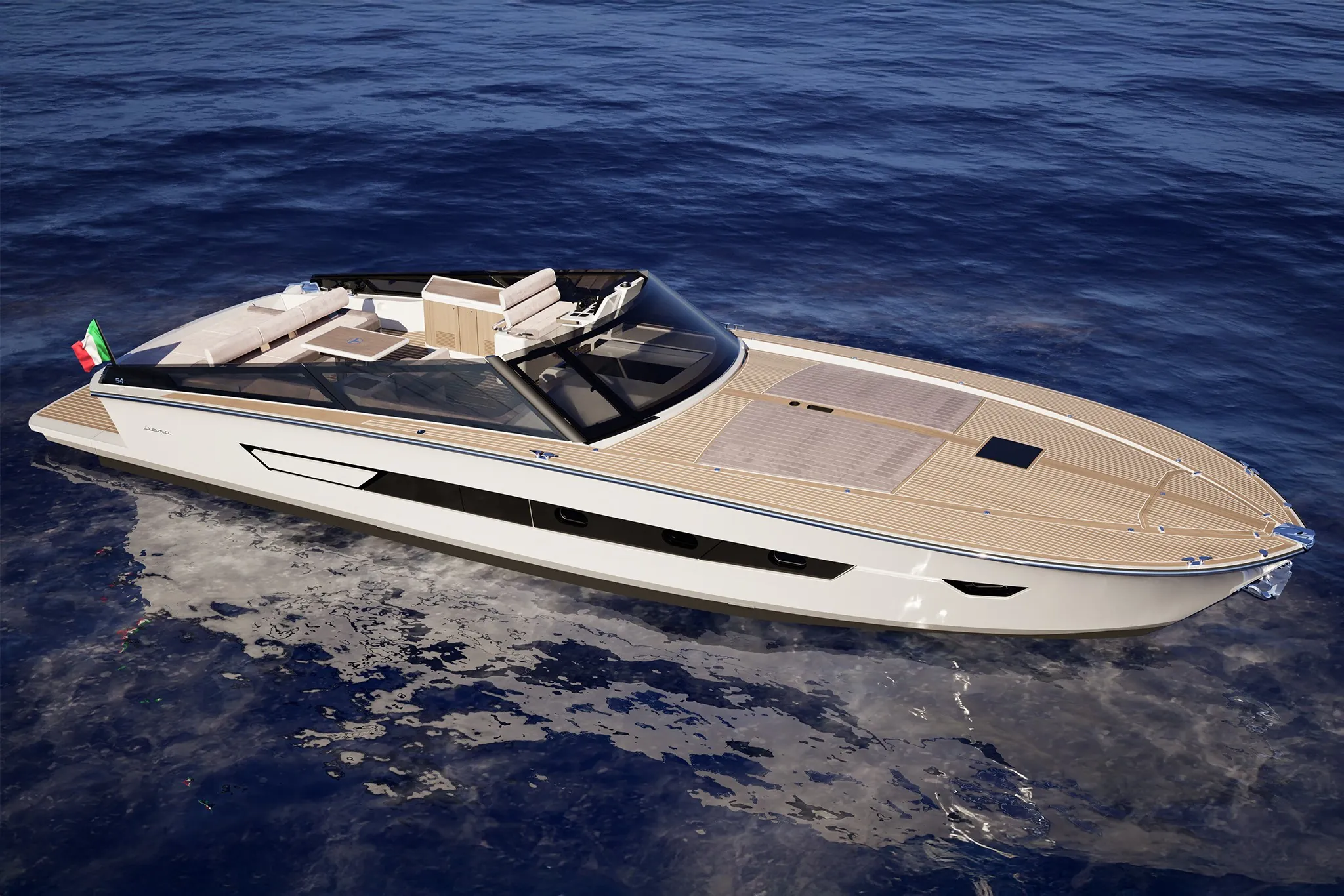
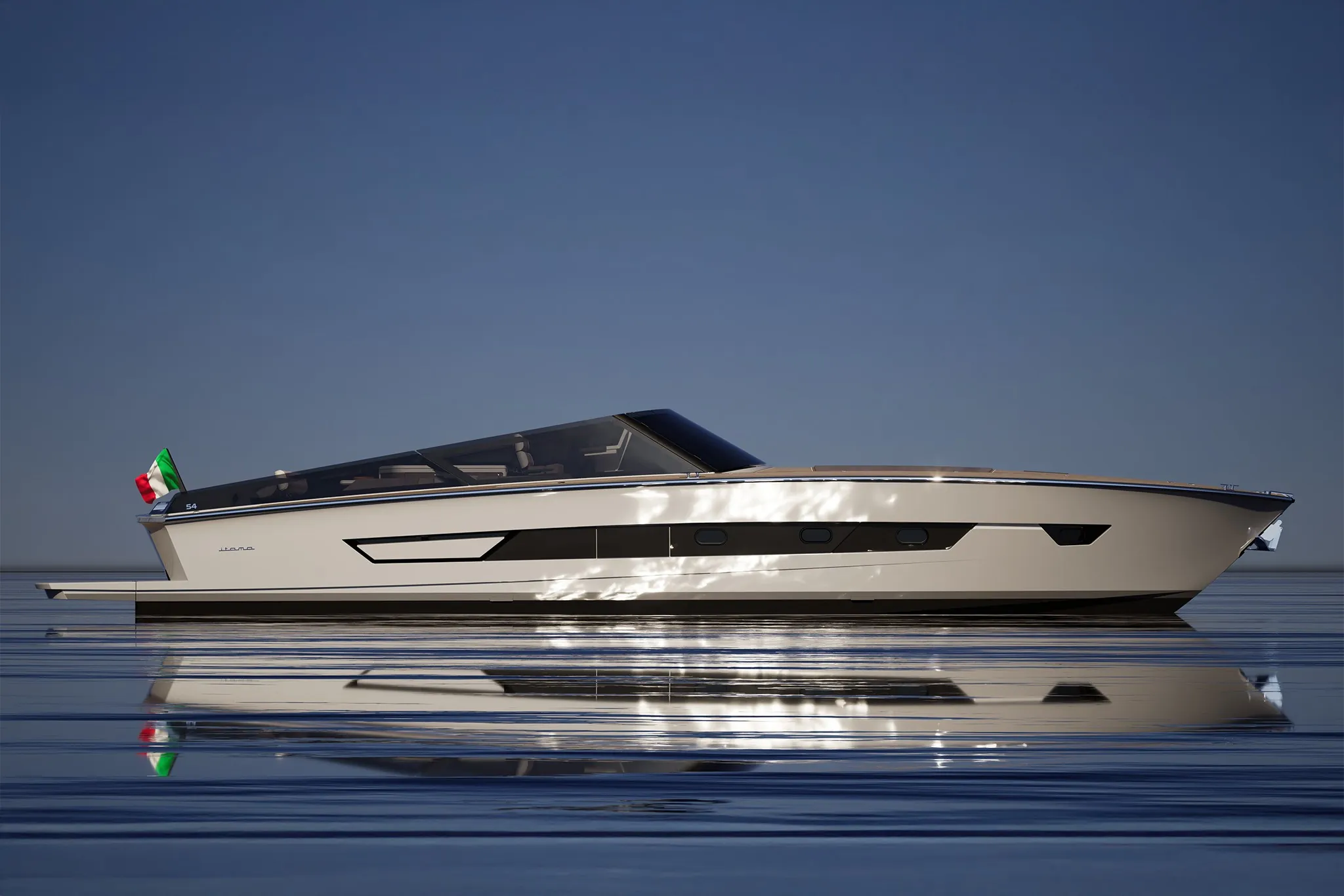
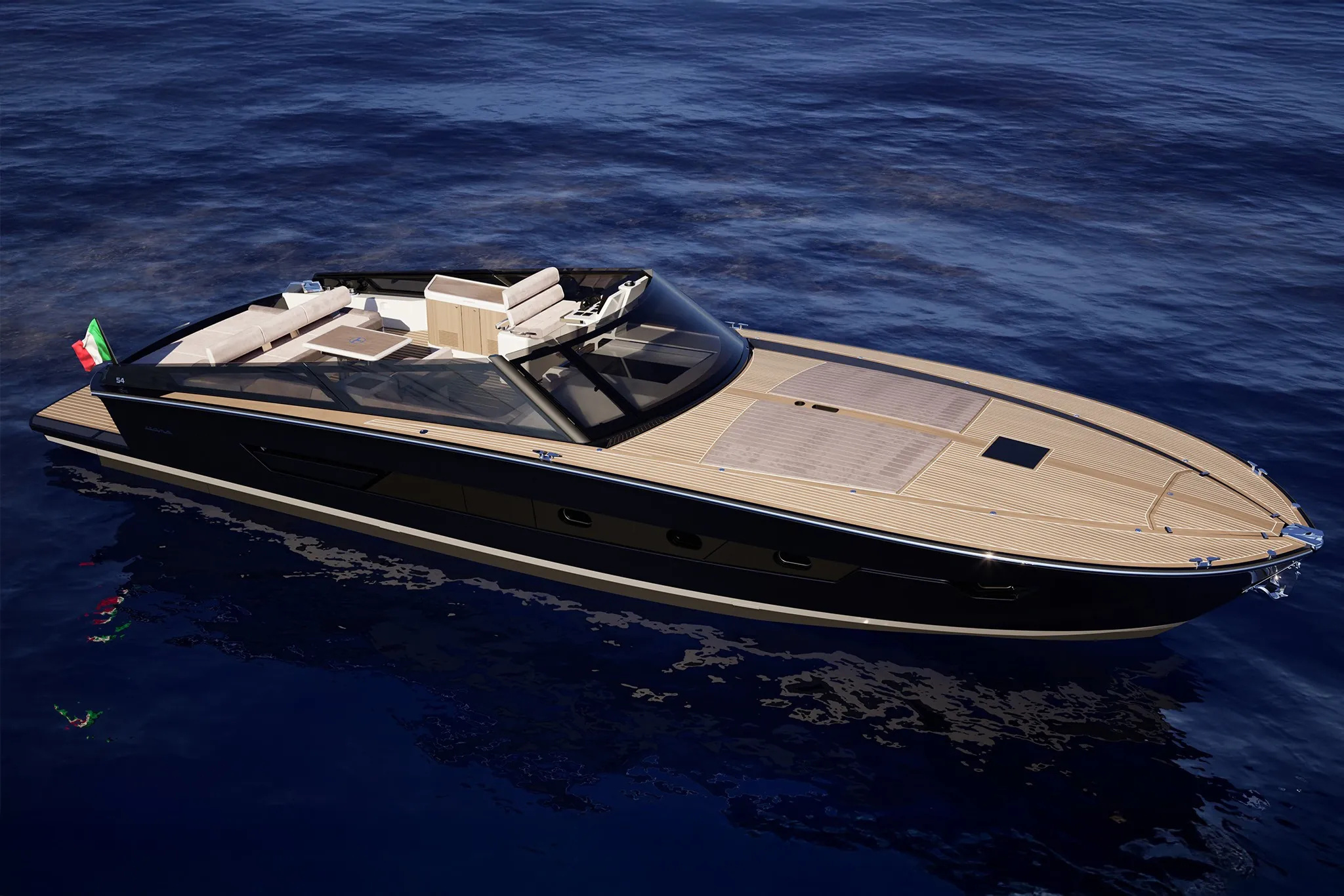
Current Itama boats center on the 45S, 62S, and 75. The 45S (about 48 feet overall) is a nimble weekender with a generous sunpad, social cockpit, and a two-cabin layout for couples or small families. The 62S (around 65 feet overall) increases volume for longer passages, with a larger galley and salon. The flagship 75 (approximately 78 feet overall) brings presence to the open configuration, offering multiple cabin options and expansive outdoor living areas.
Construction employs composite sandwich laminates with fiberglass and advanced resins. Vacuum infusion, structural reinforcements, and careful weight management deliver rigidity while keeping weight down. High-grade stainless hardware, teak decking, and meticulous joinery contribute to durability and elevate the onboard experience. These hallmarks—together with the deep-V running surface—are what make Itama yachts unique among open sport yachts.
Performance, Handling, and On-Water Experience
Itama yachts are powered by twin inboard diesel packages from leading manufacturers. Itama engine and propulsion types typically include shaft-drive configurations tuned for balance and reliability. Expect efficient cruising in the mid-20s to low-30s knots, with Itama performance and top speed approaching or exceeding 40 knots on higher-output setups. How fast are Itama yachts? Model and engine dependent, many reach 35–44 knots at peak, with confident acceleration and composed manners. Range varies by model, loading, and conditions; many owners plan for 200–300 nautical miles at an efficient cruise with prudent reserves, aligning real-world Itama cruising range and fuel consumption with itinerary goals.
The deep-V hull is central to sea-keeping, tracking straight, carving predictably in turns, and maintaining pace through moderate chop. Typical use cases include coastal passages and island hopping. Stabilization options and trim systems are available to fine-tune running attitude and comfort underway and at anchor.
Comfort is supported by sound insulation, resilient engine mounts, and balanced weight distribution. Owners report low vibration, a dry ride for an open yacht, and a reassuringly solid feel. Open decks encourage day use, while climate control, modern galleys, and well-planned cabins enable extended weekends aboard. These traits underscore why choose an Itama over other sport yachts: the blend of open-air connection, purposeful design, and dependable performance stands out.
Buying Considerations, Ownership Costs, and Aftercare
• New vs. pre-owned: For new builds, confirm delivery timelines, propulsion options, electronics, and customization. For pre-owned models, review engine hours and service history, inspect hull and deck for stress cracks, assess teak and upholstery, test electrical and plumbing, and verify electronics functionality when buying a motor yacht.
• Performance due diligence: During sea trials, document Itama performance and top speed, acceleration, sound levels, and tracking. Validate Itama engine and propulsion types against maintenance records and confirm expected Itama cruising range and fuel consumption at multiple rpm settings.
• Value profile: Depreciation is steepest in the first years; well-maintained examples tend to hold value, supported by the brand’s reputation and distinctive open design.
• Operating costs: Budget for insurance, annual engine service (fluids, filters, impellers), haul-outs, bottom paint in saltwater, and routine consumables. Berthing depends on length overall and location. Fuel planning should account for desired speed, hours at cruise, and local pricing when buying a motor yacht.
• Customization and coverage: Options include hull and upholstery colors, electronics suites, audio/visual upgrades, stabilization, and advanced navigation. Factory warranties vary by component; Allied Marine can outline current coverage and extended service plans.
As a Ferretti Group dealer, Allied Marine supports the full lifecycle of ownership, from identifying the right listings when buying a motor yacht to commissioning, authorized parts, certified technicians, mobile service, and seasonal care programs. For deeper insight, refer to itama yachts: the complete buyer’s guide as a checklist to assess Itama engine and propulsion types, confirm Itama cruising range and fuel consumption, and benchmark performance. Why choose an Itama over other sport yachts? Italian build quality, a proven deep-V, and measurable Itama performance and top speed paired with reliable Itama engine and propulsion types and practical Itama cruising range and fuel consumption make the case. And where are Itama yachts built? In Italy, within Ferretti Group facilities known for advanced composites and rigorous quality control.
POPULAR ITAMA YACHT MODELS
| Model Name | Beam | Draft | Engines |
| Itama 45RS | 3.95 m (12′11″) | 1.33 m (4′4″) | Twin Cummins QSB 6.7 550 HP diesel engines, shaft drive |
| Itama 62RS | 4.75 m (15′7″) | 1.70 m (5′7″) | Twin MAN V12 1400 HP diesel engines, shaft drive |
| Itama 75 | 5.92 m (19′5″) | 1.44 m (4′9″) | Twin MTU 12V 2000 M96 1,826 HP diesel engines, shaft drive |
| Itama FiftyFive (55) | 3.91 m (12′10″) | 1.70 m (5′7″) | Twin MAN V12 1,100–1,360 HP diesel engines |
| Itama Fifty (50) | 4.22 m (13′10″) | 1.50 m (4′11″) | Twin MTU 8V 2000 M91 1,100 HP diesel engines |
| Itama Forty (40) | 3.95 m (12′11″) | 1.22 m (4′0″) | Twin MAN 450 HP diesel engines |
| Itama 38 | 3.70 m (12′2″) | 1.05 m (3′5″) | Twin Caterpillar 435 HP diesel engines |
| Itama 46 | 4.42 m (14′6″) | 1.33 m (4′4″) | Twin MAN V8 800 HP diesel engines |
| Itama 54 | 4.75 m (15′7″) | 1.60 m (5′3″) | Twin MAN V12 1,360 HP diesel engines |